

california
What is an Installment Loan? Starter Guide
What is installment loan? Everything you need to know right here.
Thu, Mar 20, 2025



Unexpected expenses, from car repairs to medical bills, can arise when we least expect them. That’s why many individuals seek quick cash solutions to bridge financial gaps. Various types of loans exist to address these needs, including personal, home equity, debt consolidation, and payday loans. Each serves a specific purpose: to cover a large expense or consolidate debts into more manageable payments.
However, among these options, installment loans tend to stand out in the comparison between installment loans vs. revolving credit due to their structured repayment plans and fixed interest rates, offering a clear advantage. Understanding the differences between installment loan types and other forms of borrowing can empower individuals to make informed financial decisions tailored to their needs. Let’s explore the world of installment loans, including their types, requirements, and benefits.
What is an Installment Loan and How Does it Work?
When pondering how installment loans work, it’s crucial to grasp their fundamental mechanics. These loans entail receiving a lump sum of money from a lender, repaid gradually through fixed, scheduled payments.
Borrowers begin by submitting an application, detailing the loan’s purpose, such as purchasing a car. During this process, lenders discuss various terms with borrowers, including down payments, loan durations, payment schedules, and amounts. Installment loans are accessible through diverse sources like online platforms, private lenders, and credit unions, with repayment terms typically spanning 24 to 60 months, sometimes extending up to 72 months. Loan amounts vary between $1,000 and $100,000, offering adaptability for different financial needs.
Why Do You Need an Installment Loan?
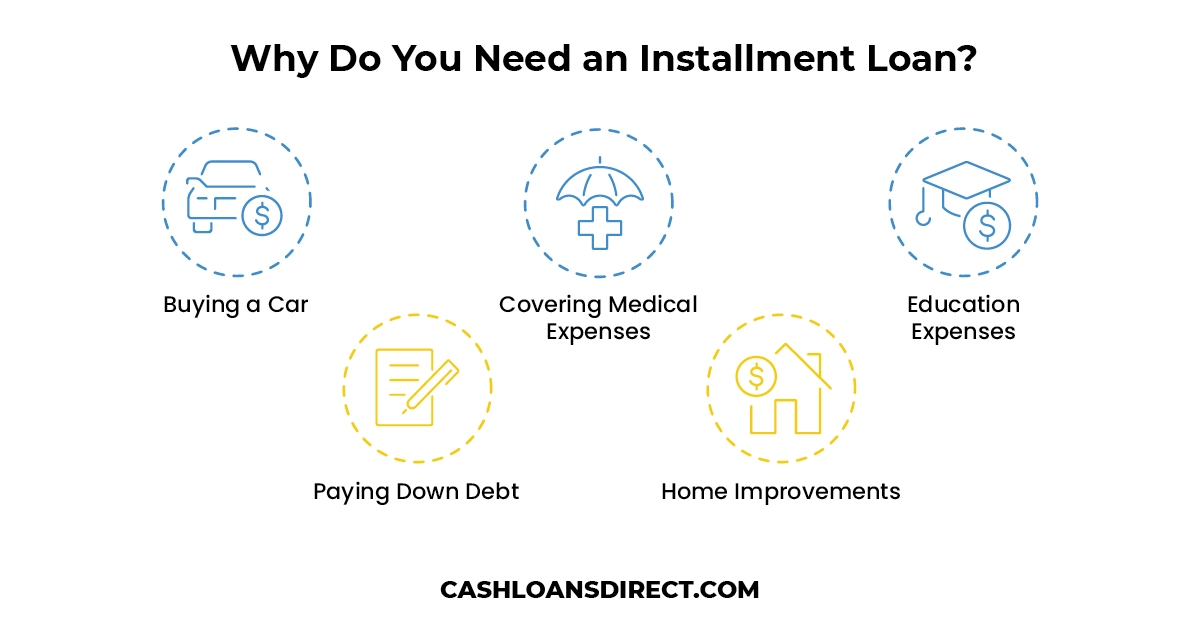
When considering financial solutions, many individuals opt for installment loans over alternatives like cash advances or payday loans due to their structured repayment plans and flexibility. Installment loans offer a range of benefits, making them a popular choice for various needs. Here are how you can use an installment loan:
- Buying a car: Whether a new or used vehicle, installment loans provide the funds needed to make a purchase with manageable repayment terms.
- Paying down debt: Consolidating high-interest debts into a single installment loan can simplify payments and reduce overall interest costs.
- Covering medical expenses: Unexpected medical bills can strain finances, but an installment loan can provide the necessary funds to cover expenses without disrupting cash flow.
- Home improvements: From renovations to repairs, an installment loan offers a convenient way to finance home projects, enhancing comfort and value.
- Education expenses: Whether pursuing higher education or investing in professional development, an installment loan can help cover tuition, books, and other educational costs.
In each of these situations, an online installment loan offers a straightforward solution, providing access to funds with clear repayment terms. We encourage you to check out our FAQ for more great information.
What Is and Isn’t an Installment Loan?
Navigating the world of borrowing can be intimidating, especially when distinguishing between installment loans and revolving credit. While both provide access to funds, they operate differently.
Installment loans, such as car loans or student loans, involve borrowing a fixed amount and repaying it over time through scheduled payments. On the other hand, revolving credit, like credit cards, offers a line of credit that can be continuously borrowed against and repaid. Understanding these distinctions is crucial for making informed financial decisions.
Is a Car Loan an Installment Loan?
Yes, a car loan is indeed an installment loan. When you take out a car loan, you borrow a specific amount from a lender to purchase a vehicle. The loan is repaid over a set period, typically through fixed monthly payments, until the loan amount and interest are fully paid off. This structure distinguishes it from revolving credit, like credit cards, where the amount borrowed can fluctuate, and payments may vary based on usage and outstanding balances.
Is a Credit Card an Installment Loan?
No, a credit card is not considered an installment loan but rather a form of revolving credit. With a credit card, you’re given a line of credit that you can continuously borrow against and repay. Unlike installment loans, where you borrow a fixed amount and repay it over time, credit card balances can fluctuate based on usage.
Is a Student Loan an Installment Loan?
Yes, a student loan is a type of installment loan. It’s designed to help students cover higher education costs, including tuition, books, and living expenses. Student loans are repaid over time through fixed monthly payments, typically after the borrower completes their education.
These loans offer a structured approach to financing education, providing students the means to invest in their future career prospects.
Is a Mortgage an Installment Loan?
Yes, a mortgage is a prime example of an installment loan. It’s a substantial loan typically used to finance the purchase of a home. Mortgages are repaid over a long period, often 15 to 30 years, through fixed monthly payments, making them a classic form of installment borrowing.
Currently, average mortgage rates vary, with a 30-year fixed-rate mortgage remaining at around 7.27%. This type of loan enables individuals to purchase property while spreading out the repayment over an extended period, facilitating homeownership.
Is a Payday Loan an Installment Loan?
No, a payday loan is not classified as an installment loan but rather a short-term, high-cost borrowing option. Unlike installment loans, where funds are repaid over time through scheduled payments, payday loans usually require repayment in full, including fees and interest, by the borrower’s next payday.
These loans often come with extremely high-interest rates and fees, making them a costly form of borrowing. Due to their short-term nature and immediate repayment requirement, payday loans differ significantly from installment loans in terms of structure and affordability.

What Do You Need to Apply for an Installment Loan?
When applying for an installment loan, several requirements must be met. At a minimum, you’ll need a steady source of income, a valid checking account, a working telephone number, and a valid ID confirming you meet the minimum age requirements. Additionally, you’ll likely be asked to provide your social security number, and a credit check may or may not be conducted as part of the application process.
Instant funding may be available to an installment loan debit card when you choose to pre-authorize the repayment of your installment, title, line of credit, or payday loan with the same debit card used to fund it. This option can streamline the repayment process and provide added convenience.
Choosing the Right Installment Loan For You
Understanding the nuances of installment loans is essential for making informed financial decisions. We’ve explored the basics of installment loans, including their structure, application process, and considerations for borrowers. When selecting a loan option, it’s crucial to weigh factors such as interest rates, repayment terms, and eligibility requirements.
Assessing your financial situation and needs can help you choose the installment loan that best fits your circumstances. Additionally, being aware of fees and repayment obligations is vital to avoid financial pitfalls. Whether consolidating debt, covering unexpected expenses, or financing a major purchase, an installment loan can be a valuable tool when managed responsibly.
Take the first step towards financial stability and security by exploring our installment loan options today. Click here to get started on your application journey.
Are you ready to apply?
Click Apply Now to complete our easy online loan application and instantly receive your loan decision.