

california
How to Handle Medical Emergencies When You’re Short on Cash
Learn what do you do if you don’t have the funds to cover a medical emergency.
Thu, Oct 16, 2025


Medical emergencies. They happen. And by their very nature, they’re unplanned, unexpected, and often, very expensive. A trip to the emergency room alone can easily run you about $2,715. And a ride in an ambulance. We hate to say it, but you could be looking at about $1,277. That’s just for the ride alone. Sure, you might have insurance, but unless you have hit your deductible for the year, the chances are that your pocketbook is going to have to cover a healthy share of those fees. And if you don’t have insurance, you’re going to have to carry that financial burden all on your own.
So what do you do if you don’t have the funds set aside to cover these high-cost medical emergencies? That’s where medical emergency loans can help. In this article, we’ll explain what these loans are and how you can prioritize your care while also footing the bill.
Stay Calm and Prioritize Care
When you are faced with an unexpected expense, especially one that is medical in nature, it can be worrisome, to say the least. Whether it is for your care or that of a loved one, you’re not just faced with how to come up with the money, but you’re worried about how you’ll recover and any long-term care needs. You may also be concerned about time away from work. If you don’t have enough personal time in your sick bank, that can absolutely be an additional stressor.
But here’s the thing. You have to put your health and safety first. If you’re sick or if you have experienced some form of injury, the chances are that you need medical care. Deprioritizing your care now may seem like it will save you some money, but in all likelihood, it may cost you more in the long run.
So what do you do? Here are some tips to take to make sure you get the care that you need.
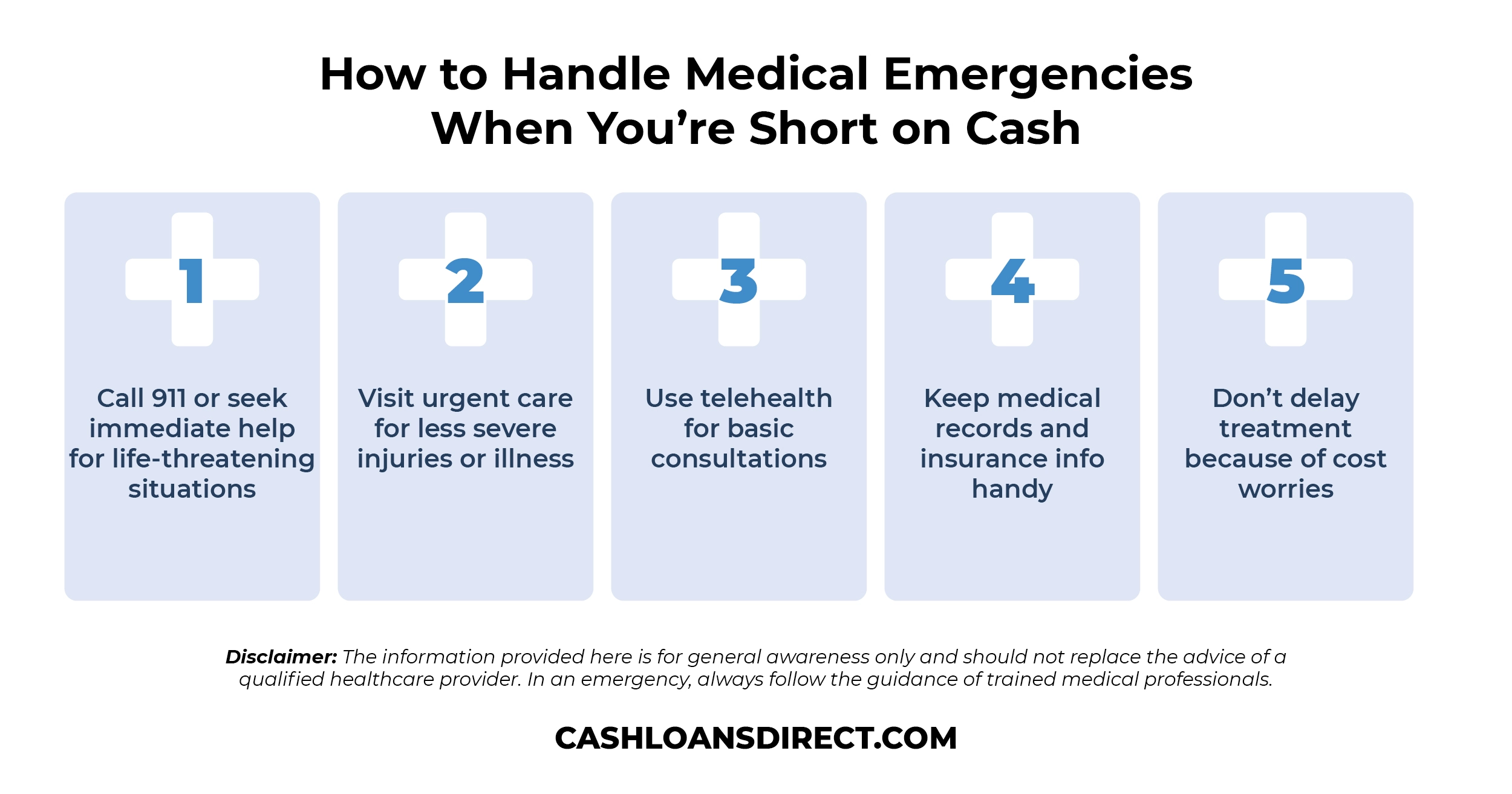
- Call 911 or seek immediate help for life-threatening situations: If someone is unconscious, having chest pain, difficulty breathing, uncontrolled bleeding, or other severe symptoms, call 911 or head directly to the nearest emergency room. And if you have children or a relative who lives with you, make sure they know how to call 911 should you be the one in need or urgent medical care.
- Visit urgent care for less severe injuries or illness: It might not be intuitive because medical care is medical care, but going to the urgent care vs. the emergency room can save you a lot of money. In fact, it’s estimated that the ER can cost you nearly 10 times as much.
- Use telehealth for basic consultations: If you are just feeling under the weather with a mild cough or flu-like symptoms, or you have a skin concern, consider a virtual or telehealth appointment. Many providers now offer you the ability to simply complete an online form with your symptoms, and they can respond with treatment protocols without even seeing you. If the provider is concerned about a more serious health issue, they will guide you on the best course of action to follow.
- Keep medical records and insurance info handy: Having quick access to key documents can accelerate the check-in process and may even reduce the likelihood of billing errors or miscommunication. The last thing you want when you have not been feeling well and are faced with medical expenses is to answer a lot of unnecessary questions that could have been addressed up front.
- Don’t delay treatment because of cost worries: There are ways to get help paying for care, including medical emergency loans from Cash Loans Direct.
Disclaimer: The information provided here is for general awareness only and should not replace the advice of a qualified healthcare provider. In an emergency, always follow the guidance of trained medical professionals.
Understanding Your Payment Options
Though the costs for various medical treatments are pretty standard and not something you can negotiate, you can work with the billing office to set up payment plans. While there is no federal requirement for them to do so, many do as a standard practice.
Here are some tips to follow to help you negotiate your payments, as well as how to gain access to financial assistance in your time of need.
Tips for Applying for Hospital Financial Assistance or Charity Care
Thanks to the Affordable Care Act (ACA), nonprofit hospitals are required to provide access to their Financial Assistance Policy (FAP). Here’s how you can use that policy to your advantage.
- Ask the billing department about financial assistance: Every nonprofit hospital must have a policy in place, and they are required to tell you about it if you ask. You’ll also find notices on your bill or in the hospital lobby.
- Request a copy of the FAP: This document outlines who qualifies for help, how much of your care may be free or discounted, and the steps you need to take.
- Gather documents before applying: This usually includes recent pay stubs, tax returns, and insurance information if you have any.
- Submit an application quickly: Some hospitals have deadlines for applying after receiving care, so don’t wait.
- Ask about retroactive help: In some cases, you can still get assistance for past bills even if you’ve already been treated.
Other Options to Help You Pay for Medical Costs
Applying for assistance through the ACA is not your only option. Here are some other things to look into.
- Set up a payment plan with the medical biller. Many providers will allow you to break large bills into smaller monthly payments. Some providers, though not all, will also do this without charging you interest.
- Use your Health Savings Account or Flexible Spending Account. Those pre-tax dollars can be applied to eligible medical expenses.
- Use your credit card: Though this option should be used as a last resort, it is a solid way to cover your medical expenses if needed. If you take this route, however, pay attention to your credit card utilization and make sure to pay your bills on time each month.
- Apply for a medical credit program such as CareCredit. This has become a popular way to cover the expenses associated with medical emergencies.
If the proposed solutions above don’t work for you, you can also explore medical emergency loans.
Short-Term Financial Help for Emergencies
So, just what are medical emergency loans? If you go online to search for this type of financial solution, Google will return a lot of different options. Typically, you’ll see recommendations for personal loans, including things like payday loans and installment loans.
Payday loans are a super-fast way to get you money when you need it. If you apply and qualify, you may receive your funds as quickly as the same day. The process is simple and approval doesn’t rely on a high credit score.
That said, be sure to understand how payday loan interest rates work before you apply and sign on the dotted line. These loans do come with higher-than-average interest rates and require payment typically around the time of your next payday.
Other options you may want to consider include:
- Installment loans with longer repayment terms
- Cash advances from your credit card
- Borrowing from a family member or friend
- Emergency assistance from local nonprofits, employers, or religious organizations
Tips for Avoiding Medical Debt in the Future
As we implied earlier, you can’t always predict or prevent a medical emergency. But you can take steps to make sure that you have the funds available when they’re needed. The best way to do this is to review your budget and set aside a portion of your net income for your emergency fund. Even setting aside $5 a day or $10 a week is a good start. Before you know it, you’ll have money to tap into the next time an emergency strikes.
Also, if you are uninsured or underinsured, look into programs like Medicaid or what may be available to you through the ACA. These programs offer free to low-cost medical care. And, it never hurts to make a list of low-cost or free medical providers in your community. Having this on hand before an emergency takes place can save you time, money, and hassle when needed most.

Cash Loans Direct Offers Medical Emergency Loans
If you have experienced a medical emergency and need funds fast, consider a payday loan or installment loan from Cash Loans Direct. Our application process is simple, and we provide approval decisions in as little as 30 seconds. Apply today.
Are you ready to apply?
Click Apply Now to complete our easy online loan application and instantly receive your loan decision.