

california
What is Better, an Installment Loan or a Line of Credit?
Learn all about which borrowing option is best for your needs.
Thu, Sep 04, 2025


Imagine this: You finally decide to surprise your family with a once-in-a-lifetime trip to see the Northern Lights. You’ve got some money stashed away, but between airfare, gear, and lodging, your budget is stretched thin—and your savings just won’t cut it.
This is the kind of situation where people often turn to borrowing options like installment loans or lines of credit. But what’s the difference—and which one fits your needs?
An installment loan is a fixed amount of money that you borrow and pay back over a set period of time in regular, predictable payments. A line of credit, on the other hand, is more flexible—you’re approved for a maximum amount and can borrow from it as needed, only paying interest on the portion you use.
You’ll find installment loans in the form of personal loans, auto loans, or student loans. Lines of credit are often available as credit cards, home equity lines of credit (HELOCs), or revolving credit accounts from lenders.
Both options have their place. Installment loans are often used for one-time expenses—medical bills, car repairs, and debt consolidation. Lines of credit are more suited for ongoing or unpredictable needs, like managing variable income or covering occasional household repairs. So, which is better?
Installment Loans: Pros and Cons
Approximately 24.5 million Americans held a personal loan in Q4 2024, a 4.3% increase from the previous year. This steady rise shows just how popular installment loans have become, especially when people need a reliable way to handle larger expenses.
An installment loan offers a lump sum of money that’s paid back in fixed payments over a set period. At Cash Loans Direct, our installment loans are designed with flexibility and simplicity in mind, giving you access to funds quickly and the confidence of a predictable repayment schedule.
Pros of installment loans
- Set payments: Know exactly how much you’ll owe each month—no surprises.
- Clear payoff timeline: With a defined end date, you can see the light at the end of the tunnel.
- Larger loan amounts: Perfect for covering bigger, one-time expenses like home repairs, car work, or medical bills.
- Fixed interest rates: No rising rates or variable fees.
- Fast access to funds: Many lenders make receiving your funds a quick and easy process.
Cons of installment loans
- Limited access to additional funds: After the loan amount is issued, you’ll need to submit a new application if you want to borrow more.
- Payment obligation: You must continue making payments even if your financial situation changes.
Still, for most people who need a lump sum and a clear path to repayment, installment loans are a smart, manageable option.
Lines of Credit: Pros and Cons
Now let’s talk about lines of credit. Unlike installment loans, a line of credit gives you access to a revolving pool of funds that you can draw from as needed, similar to a credit card. You’re only charged interest on the amount you borrow, and once you pay it back, that credit becomes available again.
Pros of lines of credit
- Flexible access to funds: Borrow what you need, when you need it, up to your limit.
- Interest only on what you use: You won’t pay interest on unused funds.
- Reusable: As you repay what you borrow, the credit becomes available again without reapplying.
- Helpful for ongoing expenses: Ideal for variable costs, like home maintenance or irregular income periods.
Cons of lines of credit
- Variable interest rates: Rates can fluctuate, making it harder to predict costs.
- Temptation to overspend: Easy access can lead to borrowing more than intended.
- No defined payoff date: Without structure, balances can linger and accrue interest longer.
- May require stronger credit: Approval may be harder to get depending on your financial history.
While lines of credit offer convenience, they require more discipline and are best for people who need short bursts of cash over time, not a structured repayment plan.
How Credit and Qualification Compare
Before deciding whether an installment loan or a line of credit works better for you, it’s helpful to take a close look at your credit score and what the qualification process involves.
Requirements can differ depending on the lender, but there are general trends to be aware of.
Installment loans tend to have more flexible credit standards. Many lenders consider applicants with a minimum credit score around 580. These loans are often a practical option for people who have limited or rebuilding credit and want a fixed borrowing amount they can repay over time.
Lines of credit, on the other hand, usually require a stronger credit history. Most lenders look for scores between 660 and 712 and may review your income and payment history more closely. Because the borrowing limit is reusable, lenders typically look for signs that you’ve handled credit responsibly in the past.
If your credit isn’t perfect or you prefer a fixed payment structure, an installment loan may be more within reach. It provides a set amount, a clear repayment plan, and a simpler path to borrowing for many people.

Tips for Choosing the Right Option
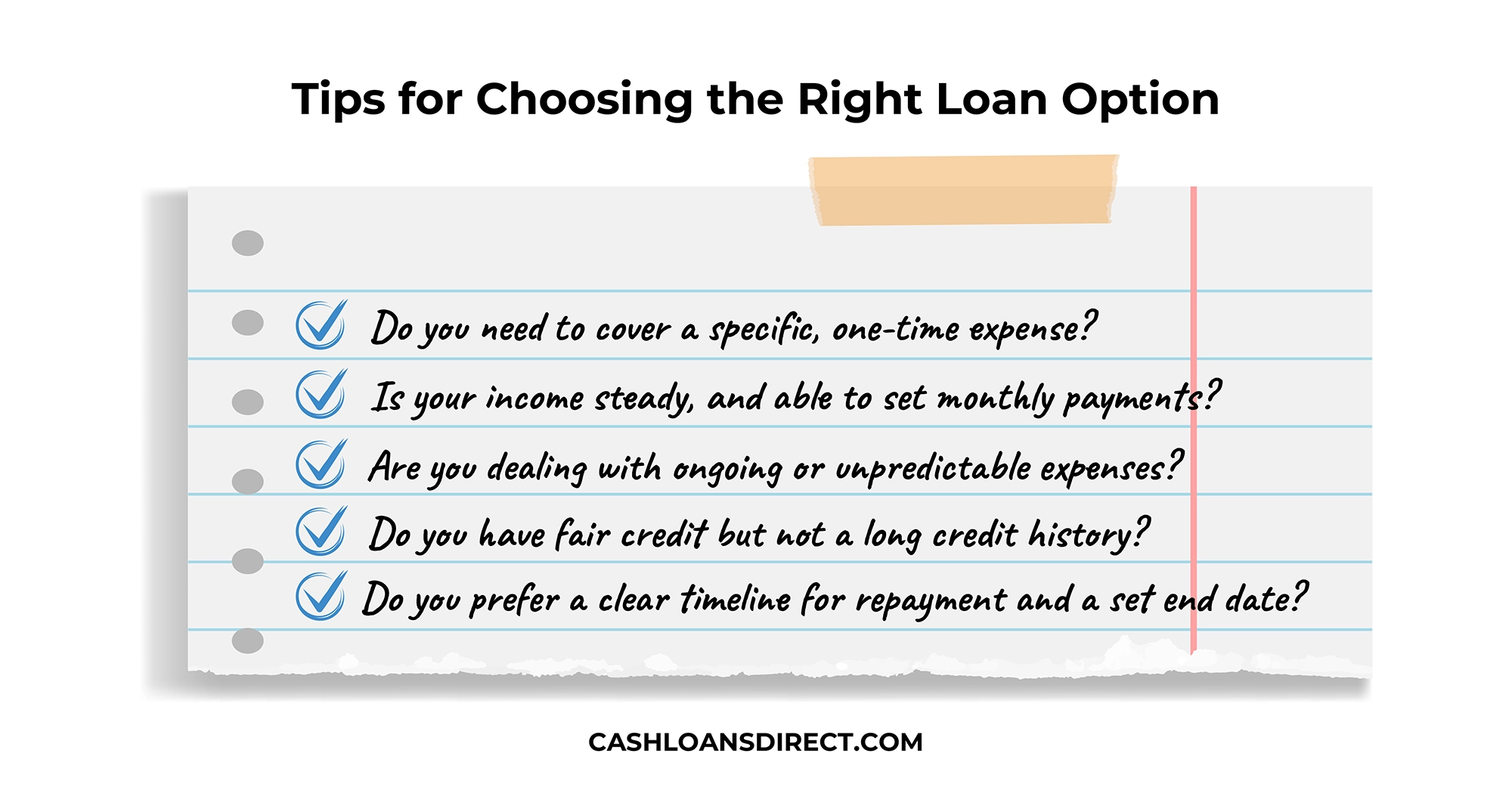
So, how do you decide what’s right for you? Check out the following list of questions to help you weigh the difference between an installment loan vs. a line of credit, based on your current financial situation and goals:
- Do you need a specific amount of money to cover a one-time expense? An installment loan is likely the better choice. Whether it’s a car repair, medical bill, or consolidating other debts, a fixed loan amount with scheduled payments can help you plan ahead.
- Is your income steady, and are you comfortable with set monthly payments? An installment loan might fit your needs. With no guesswork, you’ll know exactly how much to pay each month.
- Are you dealing with ongoing or unpredictable expenses, like freelance income gaps or frequent home repairs? A line of credit may offer more flexibility in those cases, since you can borrow only what you need, when you need it.
- Do you have fair credit but not a long credit history? An installment loan is typically easier to qualify for, especially if your credit score is around 580 or higher.
- Do you prefer a clear timeline for repayment and a set end date? Installment loans provide structure, making them a helpful option if you’re trying to manage your budget and avoid revolving debt.
Which Option Fits You Best?
Choosing between an installment loan and a line of credit depends on your financial needs, repayment preferences, and credit history. In this article, we compared how each option works, common use cases, and what to consider before applying. If you need a lump sum with a set repayment plan, Cash Loans Direct can help facilitate an installment loan with a qualified third-party that can provide a practical option with a clear path forward.
Ready to move forward? Apply now at Cash Loans Direct f for the funds you need—without the wait.
Are you ready to apply?
Click Apply Now to complete our easy online loan application and instantly receive your loan decision.